How to Make a Candy Bar: A Step-by-Step Guide

Bart van Delft
Marketing Manager
Aug 2026
7 min read
Candy bars are a favourite treat for millions worldwide, offering a delightful combination of textures, flavours, and ingredients. It’s a candy category with a lot of potential, the compound annual growth rate (CAGR) for the candy bar market is projected to grow at approximately 5.08% between 2024 and 2032.
But how exactly are they made? The process of creating a candy bar involves several key stages, from ingredient preparation to packaging. Let’s dive into the details and explore how the various machines and techniques work together to bring these delicious confections to life.
Ingredients
The Foundation of a Candy Bar
The starting point for any candy bar is its ingredients. Depending on the recipe, candy bars can include a wide range of elements, such as nougat, caramel, chocolate, nuts, and more. Each of these components adds to the overall texture, flavour, and enjoyment of the bar.
Key Ingredients:
- Nougat: A sweet, fluffy mixture made from sugar, syrup and whipping agent and optionally mixed with a fat phase to create creaminess.
- Caramel: A smooth, flavourful filling made from milk, sugar, syrup and butter.
- Chocolate: A blend of cocoa, sugar, and fat, often used to coat the candy bar.
- Add-ins: Ingredients such as nuts, fruits, rice crisps and other toppings that provide additional flavour and texture.
The quality of these ingredients significantly affects the final product. Thus, choosing high-quality raw materials is a crucial first step in candy bar manufacturing.
Mixing and Cooking
Transforming Raw Materials into Delicious Layers
Once the ingredients are sourced, they must be mixed and cooked to perfection. This is where specialized equipment comes into play. Different components require different methods of preparation.
Nougat Preparation
Nougat, a key element in many candy bars, is a whipped mixture that requires careful aeration when producing continuous. The Tanis kitchen features a two-phase system aerator that employs two mixing heads. The first mixing head prepares a low-density foam, which is then combined with a cooked sugar mass in the second mixing head. This process results in a a fluffy nougat mass, allowing for the incorporation of various additives such as fat, powdered sugar, milk, and cocoa powder.
Caramel Cooking
Tanis has developed an all-stainless steel dynamic heat exchanger specifically designed to improve the process of cooking caramel for candy bars. This film cooker efficiently heats caramel mixtures, including those with high viscosity, to the required dry matter content by quickly reaching and maintaining the necessary cooking temperature. When combined with a Maillard reactor, the system enables precise control over the caramel’s colour and flavour development, ensuring consistent outcomes in the final product.
Chocolate Tempering
Chocolate, whether it’s used as a coating or as part of the base, must be melted and tempered correctly to achieve the desired consistency and shine. Chocolate tempering machines ensure that the chocolate remains at the perfect temperature throughout the process, remaining at the required quality for adding it to the candy bar.
Other delicious ingredients
Prepare additional ingredients that can give your candy bar a distinctive flavour, texture, or experience. These could include nuts, fruits, or other ingredients that, when combined with nougat, caramel, or chocolate, create the perfect balance. Consider incorporating active ingredients like protein, transforming the candy bar into a delivery system for muscle recovery after exercise.
Forming: Precision Layer Depositing
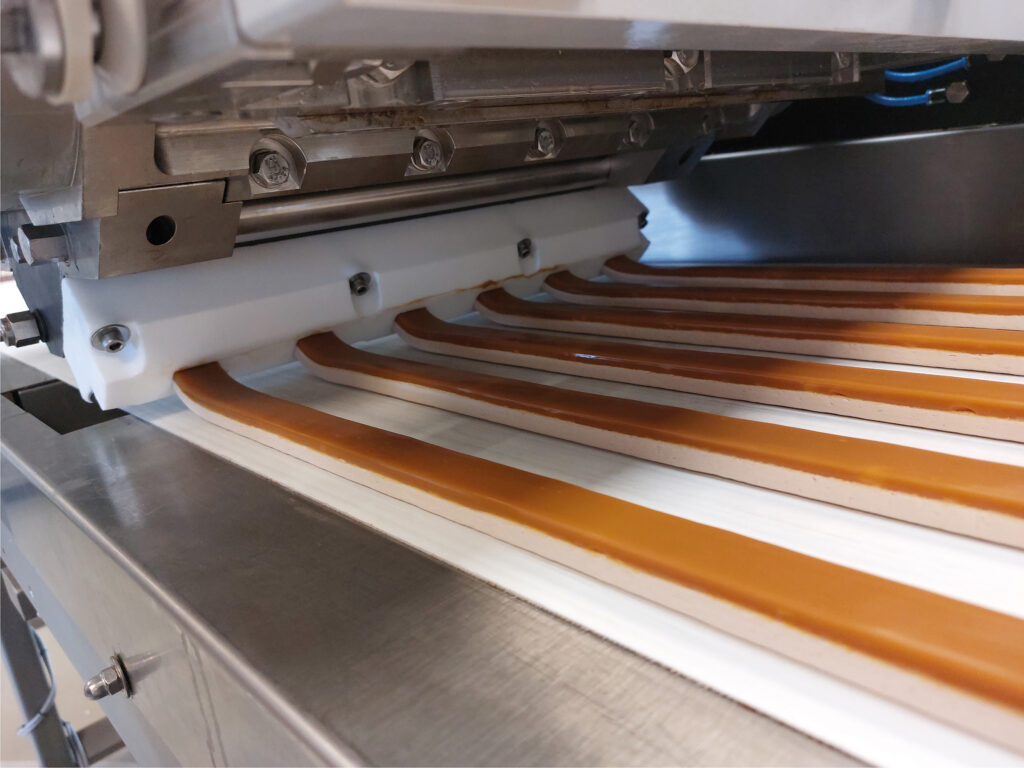
The heart of the forming process in the Tanis x Aasted Line is the Alice™ depositor. Instead of forming a large slab, Alice deposits individual multi-layer bar ropes directly onto the production line. Nougat, caramel, nuts, cereals, protein masses, and other ingredients can be accurately combined in a single depositing process, creating precise layer structures with excellent weight control and product consistency.
Cooling: Stabilizing the Product
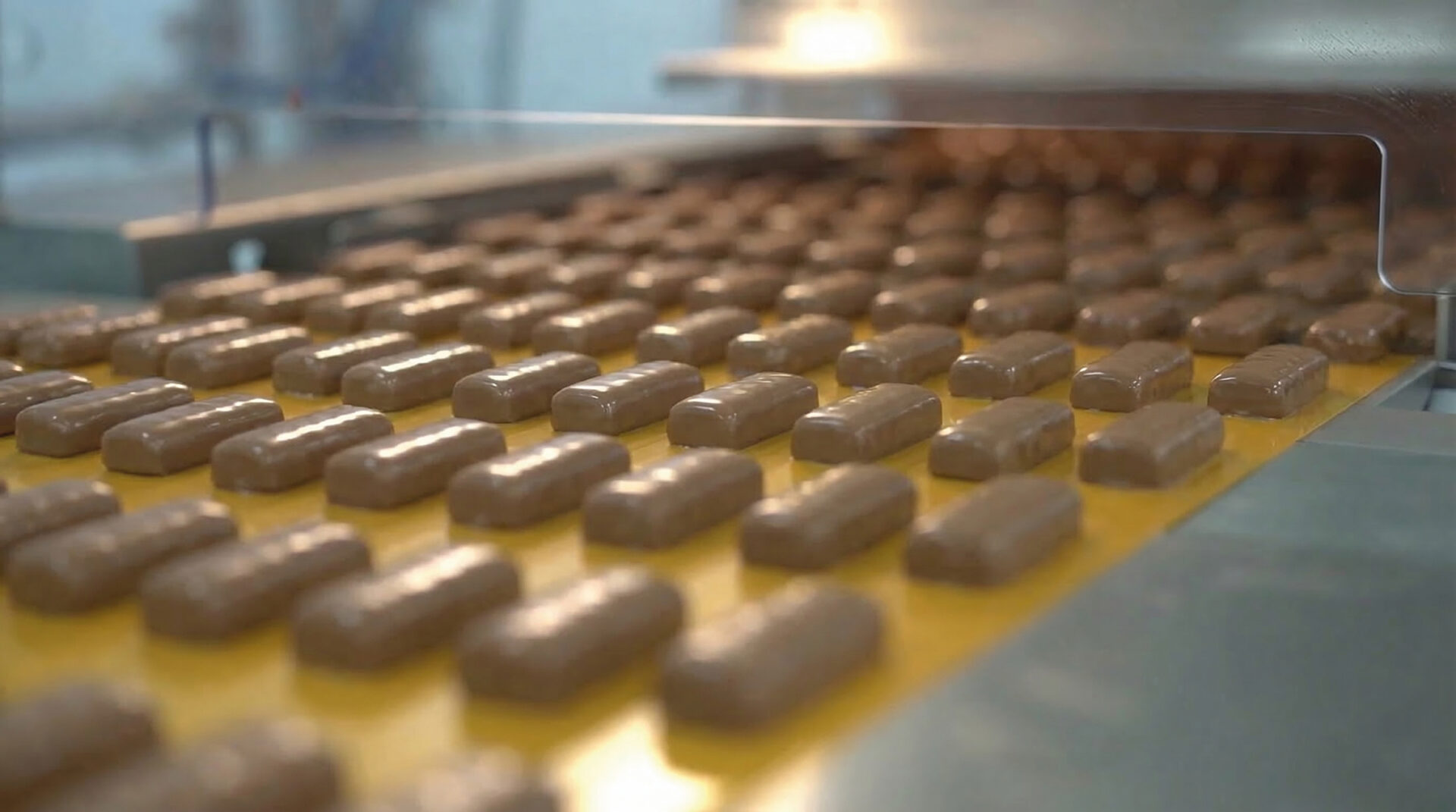
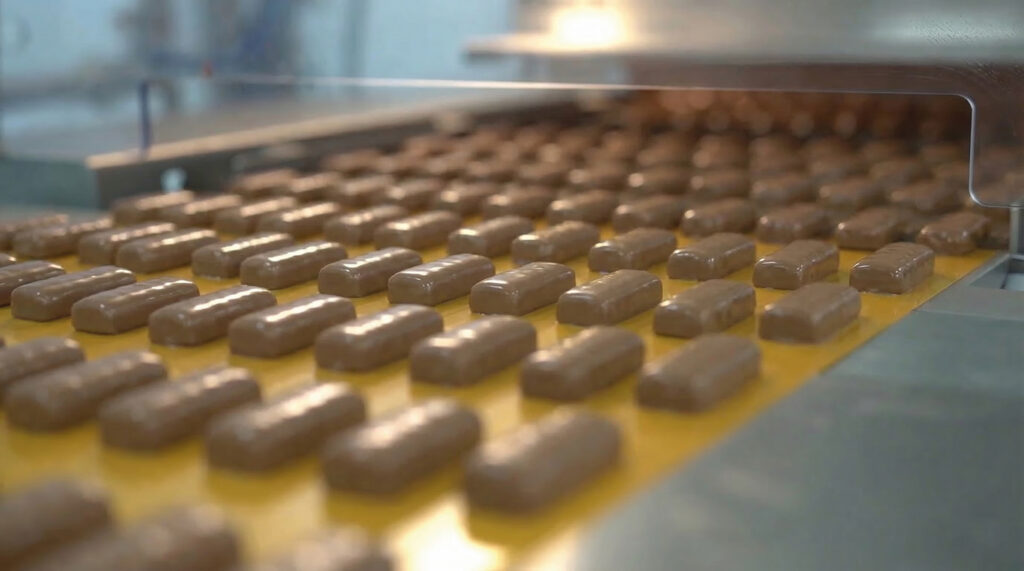
After depositing, the individual bar ropes enter the cooling tunnel where temperature and humidity are carefully controlled. This cooling process stabilizes the product structure and prepares the bars for downstream processing while maintaining the desired texture and layer definition.
Cutting: Creating Individual Bars
Once the product has reached the required temperature, the continuous deposited bar ropes are cut into individual bars. The cutting system ensures accurate portioning and consistent product dimensions, resulting in uniform bars ready for coating or final finishing.
Chocolate Enrobing and Decoration
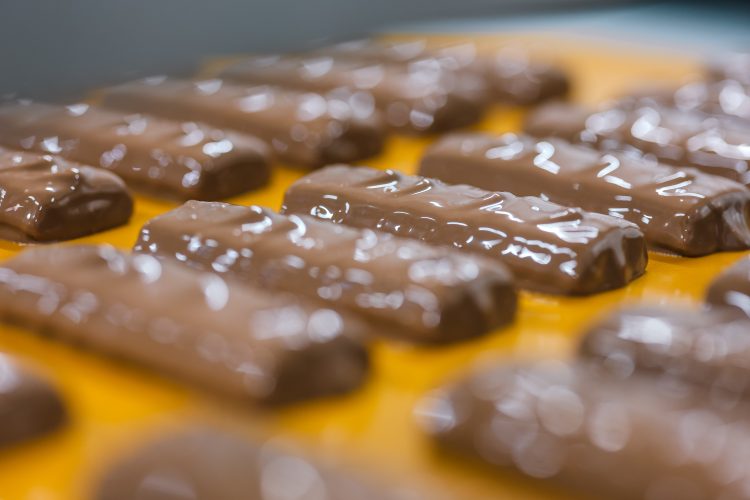
Depending on the product concept, the bars can be coated with a layer of tempered chocolate using Aasted’s enrobing technology. Additional decorations such as chocolate drizzles, nut pieces, crispies, or other toppings can be applied to create a premium appearance and unique consumer experience.
Finalizing and Packaging
After cooling and finishing, the candy bars are ready for packaging. The result is a consistently produced, high-quality candy bar, manufactured through the seamless combination of Tanis ingredient preparation technology and Aasted’s advanced depositing, cooling, and chocolate processing expertise.
Quality Control: Ensuring Consistency and Safety
Throughout the entire process, quality control plays a critical role. Manufacturers must ensure that each candy bar meets strict standards for taste, texture, appearance, and safety. This involves regular testing and inspections at every stage of production.
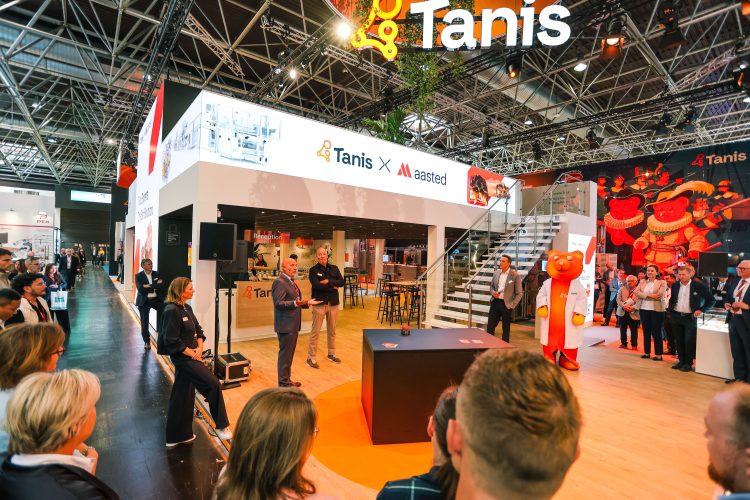
Tanis Innovation Center
During the recipe development and product testing phase, our food technologists can play a crucial role in ensuring the consistency and safety of your final product. By precisely fine-tuning the production process, we can help avoid significant adjustments during actual production. Our dedicated colleagues, with their passion and expertise, are ready to assist you in developing the candy bar of your dreams at the Tanis Innovation Center.
Before investing in full-scale production, manufacturers can validate recipes, process settings, and product concepts at the Tanis Innovation Center. Equipped with the Tanis x Aasted production setup, the facility enables complete production trials under realistic manufacturing conditions. This allows product developers to optimize formulations, evaluate product performance, and reduce scale-up risks before commercial production starts. By combining hands-on testing with the expertise of Tanis food technologists and process specialists, customers can accelerate product development and bring new candy bar concepts to market with confidence.
Taste and Texture Testing
Before the bars are packaged, samples may be taken for taste and texture testing. These tests ensure that the candy bars meet the desired flavour profile and consistency. If any issues are detected, adjustments can be made to the recipe or production process.
Food Safety
Ensuring food safety is another important aspect of candy bar manufacturing. Equipment must be regularly cleaned and maintained to prevent contamination. Additionally, ingredients must be stored and handled in a way that complies with food safety regulations.
Conclusion: The Art and Science of Candy Bar Making
The process of making a candy bar is both an art and a science, requiring careful attention to detail, precise equipment, and a passion for creating delicious confections. From the selection of ingredients to the final packaging, every step plays a crucial role in ensuring that the candy bars we love are consistently high-quality and enjoyable.
Decades of expertise from the Tanis family in the confectionery industry have culminated in a specialized team focused on all aspects of candy bar production. Crafting these versatile treats requires precision at every stage to achieve the perfect end product.
During the critical phases of recipe development and product testing, our food technologists ensure consistency and safety in every batch. By fine-tuning the production process early on, we help prevent costly adjustments later. Our passionate team stands ready to collaborate, bringing your candy bar vision to life while meeting the highest standards of quality and efficiency. Together, we’ll transform your ideas into market success.